A walkway coating should do more than make concrete look better for a while. Good walkway coatings handle foot traffic, sunlight, moisture, and the daily abuse that comes from living outside. In Orange County, lasting results begin before the first bucket of coating is opened.
It starts with careful preparation.
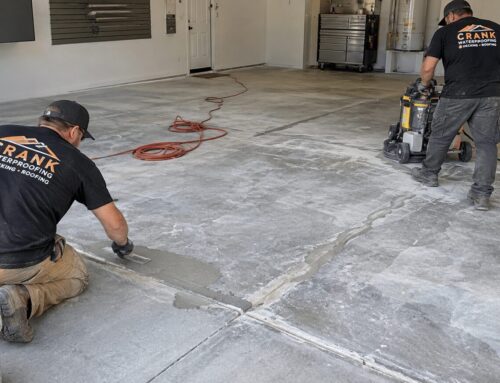
Proper Surface Preparation for Lasting Walkway Coatings
Concrete looks solid, but it is porous. In addition, the top of the concrete may contain contaminants, old coatings, and other materials that interfere with adhesion.
Covering those problems with a coating only hides them. It doesn’t fix them. And out of sight, out of mind is a recipe for failure.
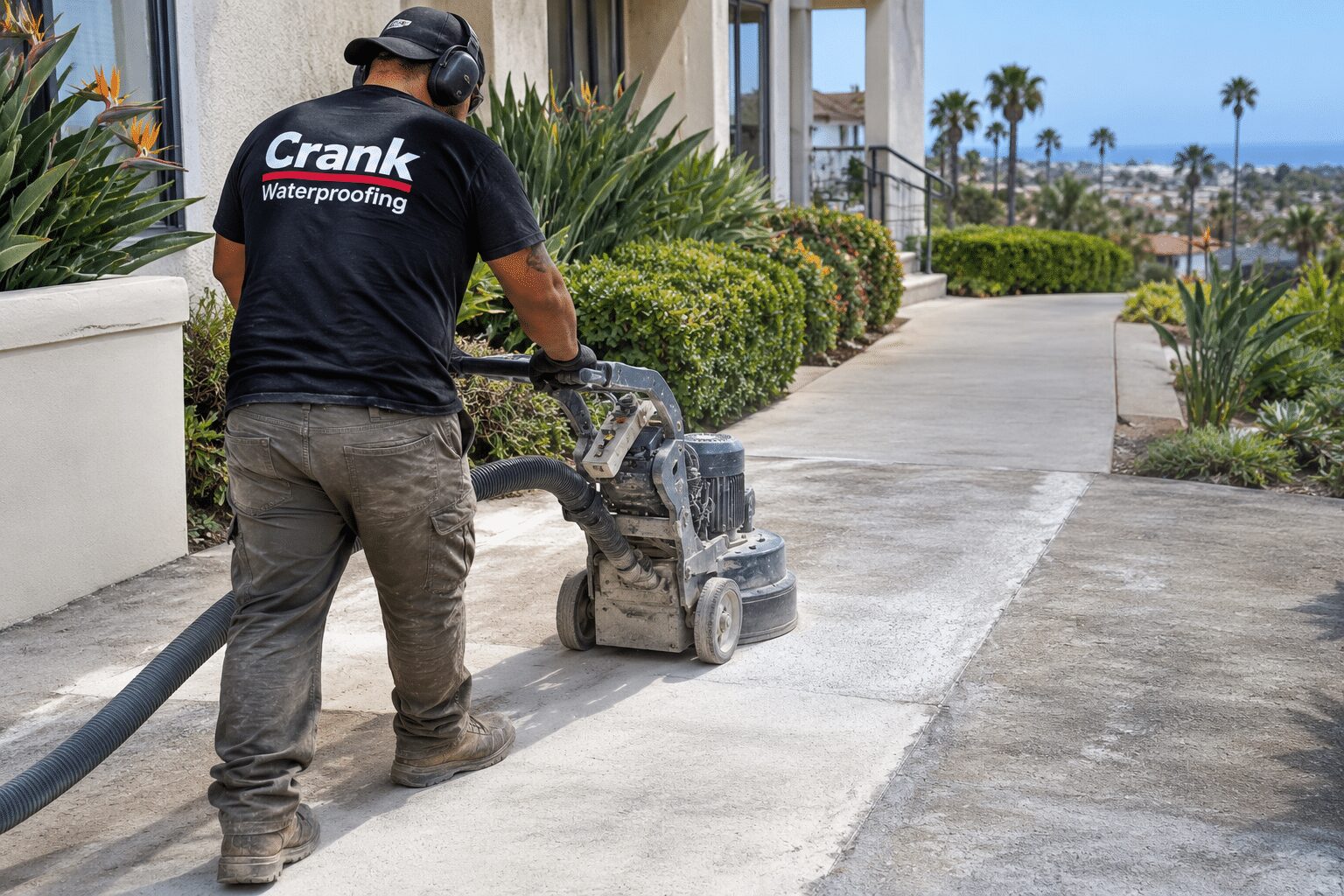
The International Concrete Repair Institute (ICRI) calls proper surface preparation the most critical step in a successful coating project. It recommends starting with a clean, sound, properly profiled, and dry concrete surface.
Preparation means different things depending on the surface condition and coating that is going down. It may be something as simple as cleaning or removing an old coating or as involved as grinding, repairing damaged concrete, or correcting the surface profile.
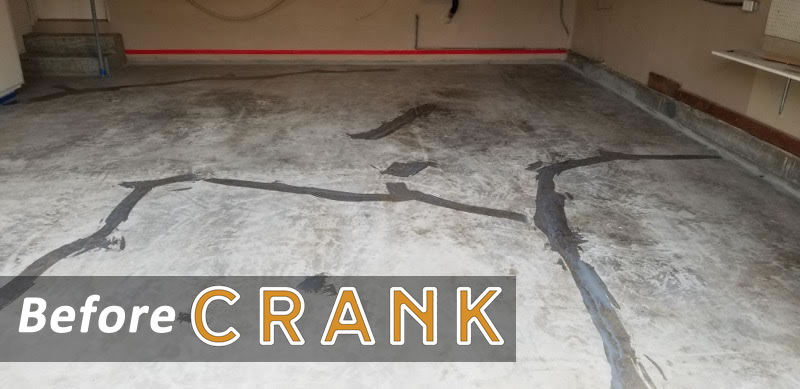
Repair Cracks Before Coating
Cracks require more than a quick patch.
First, determine what caused the crack. Normal shrinkage produces cracks, but movement and settling create them too. Tree roots and drainage problems can also affect concrete surfaces.
Simply covering an active problem increases the chance that it will show up again.
The contractor should inspect cracks, deteriorated areas, joints, edges, and transitions before the coating process ever begins. Repairs become part of the coating system rather than an afterthought.

Stop Moisture for Maximum Adhesion
Moisture comes from more than rainfall.
Orange County properties depend heavily on irrigation. Sprinklers, planters, lawns, poor drainage, and runoff can repeatedly expose walkways to water.
Because concrete is porous, moisture moves through it. Applying coatings when moisture levels exceed the manufacturer’s requirements inhibits adhesion or curing. That’s just asking for trouble in the long haul.
Drainage should always be included in the conversation. A low spot that constantly holds water needs more than another layer of coating.
Properties near the coast can face different exposures than properties inland. A walkway in Newport Beach must endure persistent marine moisture, while one in Mission Viejo deals with hotter afternoon surfaces and irrigation exposure.
The coating system and preparation need to fit the location.
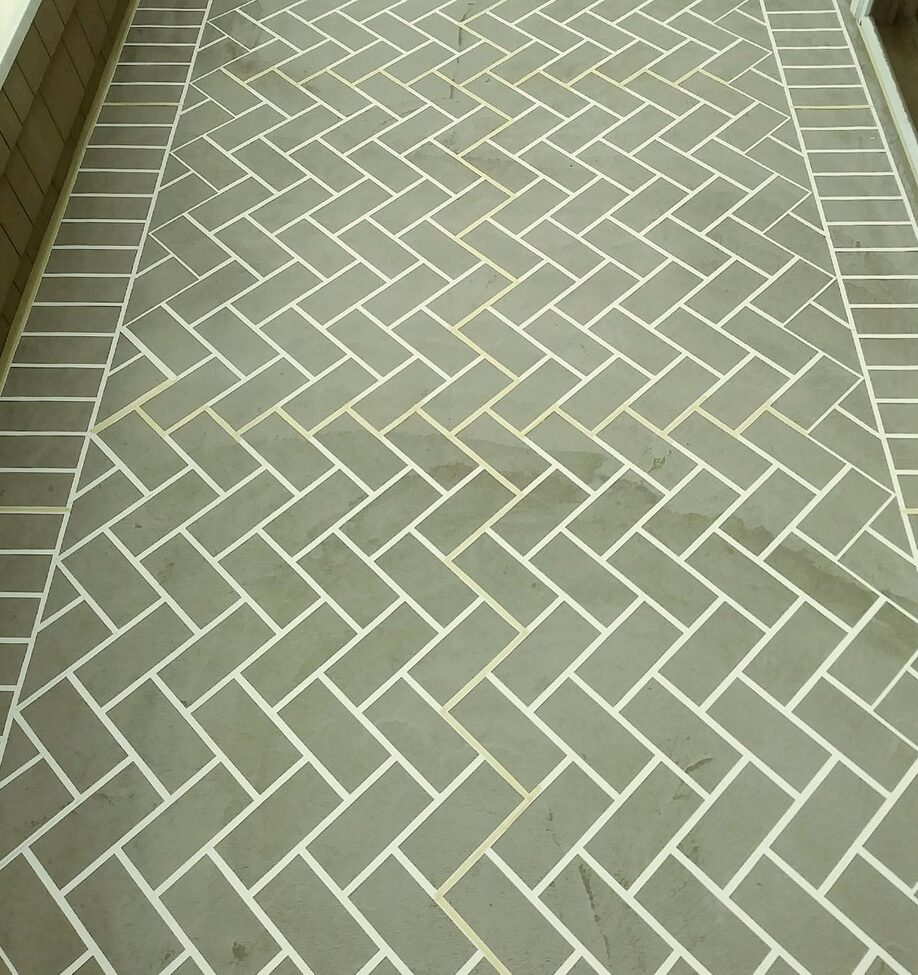
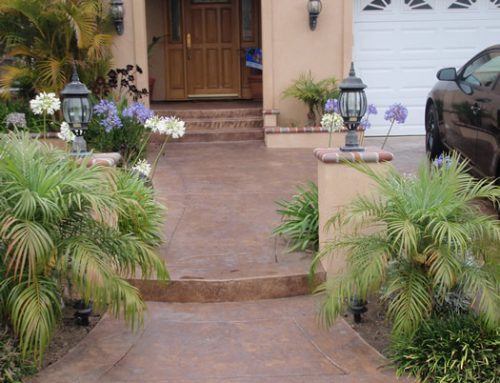
These only look like bricks
Application Matters Too
The best surface prep never compensates for poor application.
Each product carries requirements for coating thickness, application methods, surface conditions, curing, and recoating. Contractors must follow those requirements when applying the coating.
Weather matters as well. Applying a coating system to a surface that is too hot, too damp, or anything outside the application requirements asks for trouble.
Good contractors don’t just watch the calendar. They watch the weather too.
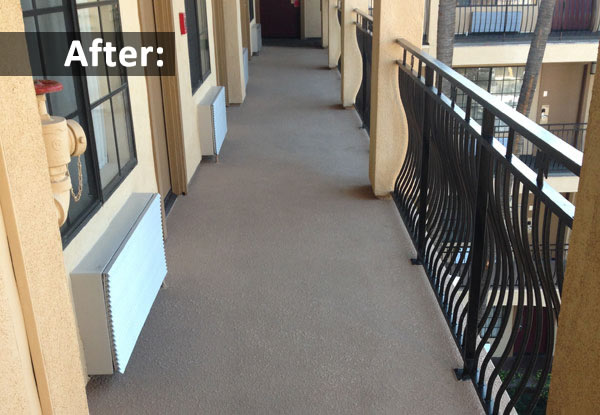
Experience With Waterproofing Makes a Difference
A walkway is a horizontal surface exposed to water, traffic, and the elements. That makes walkway coating closely related to other types of concrete protection and waterproofing.
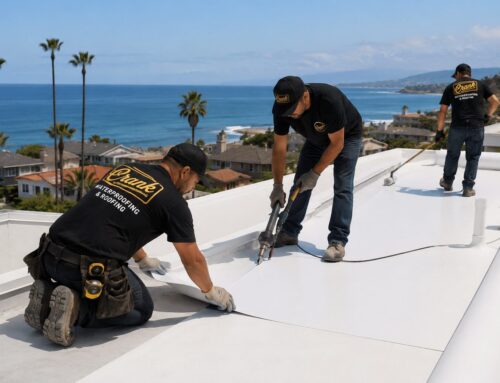
Crank Waterproofing, Decking and Roofing has been keeping water out since 1945. That experience includes waterproof decks, balconies, roofs, concrete surfaces, and pedestrian areas throughout Orange County.
The same basic principle applies to walkway coatings: understand the surface, prepare it correctly, control water, and install the appropriate system.
Walkway coatings improve the finished appearance and usability of existing concrete.
But appearance doesn’t matter if it doesn’t last. What makes walkway coatings last is everything you don’t see after the project is finished.